
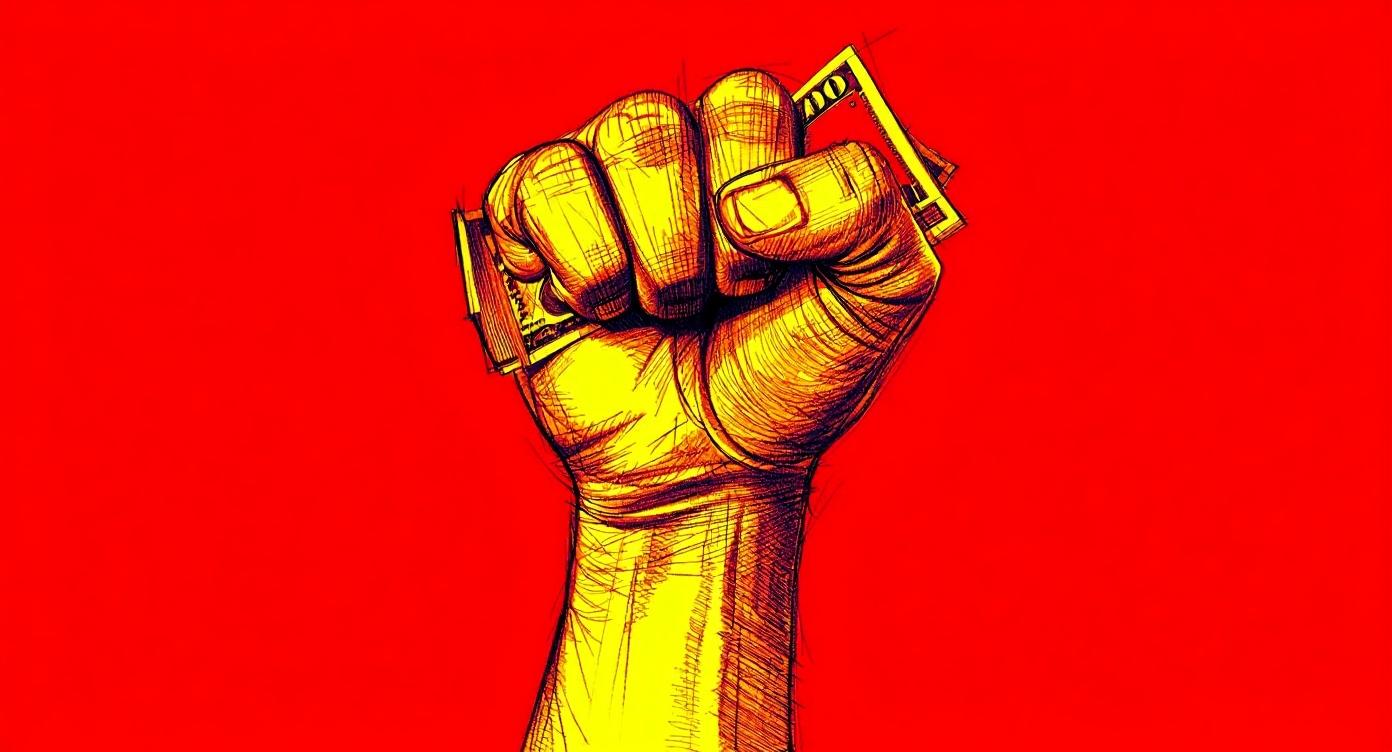
Money is power, even in humanitarian circles. And when you have almost half a trillion dollars on the table, there’s a lot of power to grab.
The total market capitalisation of the humanitarian aid and development business in 2025 was $465.2 billion, up from $330.11 billion the previous year. The projected compound annual growth rate is predicted to be between 5.7 and 6.11 percent. This is despite recent body blows to the industry by the cutting of USAID and the shifting of budgets in other northern countries from development to defence. But it is individuals that donate the most to the sector with 60 percent of the money coming from the public and the balance from a combination of corporate and government giving. The market is fragmented: There are estimated to be between 10 and 12 million Non-Government Organisations in the world controlling this massive flow of money with India being the biggest market with around 3.7 million such organisations registered. By far the most powerful actors in the space are the 75,000 International NGOs.
There is so much money and such a huge amount of activity that one would fully expect to see a decline in global poverty. Indeed, extreme poverty (defined by the World Bank in 2025 as those living on less than $3 per day – The International Poverty Line) was in decline, falling from 2.3 billion in 1990 to around 832 million in 2025, but the decline has stalled since 2020 and the picture is complex. As the economies of India and South Asia grow rapidly, poverty levels continue to fall sharply. However, conflict and instability in Sub-Saharan Africa have caused an increase. Sixty percent of the world’s poorest live in conflict zones. The figures suggest that improvement comes from economic growth and stability.
The most startling numbers point to major inefficiencies in the aid and development system; the way it is run, the way money is allocated and the way decisions are made often with no consultation with the communities involved.According to the Global Humanitarian Assistance report by Development Initiatives in 2023, just 1.2 percent of total humanitarian assistance reached local and national actors in 2022, based on figures from OCHA’s Financial Tracking Service. And this is despite the promise of the so-called “Grand Bargain” of 2016 when 30 governments and iNGOs met at the World Humanitarian Summit in Istanbul, Turkey to sign up to a promise that 25% of humanitarian funding would reach local and national actors “as directly as possible” by 2020. The deadline has since been increased to 2026 and there were 71 signatories by the end of 2025.
It’s not about money. It’s about power
What the figures point to but don’t fully reveal is the imbalance of power in the humanitarian and development world. The money doesn’t reach local organisations, not because it is misdirected to line people’s pockets (although that may also happen ), but because the iNGOs know that money is power and they seek to control those funds for as long as possible. The funds are used to pay for global north offices, global north employee salaries, travel, accommodation, marketing and vehicles.
How is this allowed to happen? Simply because all the power in decision-making is held by the global north where these giant NGOs are based.
By controlling the flow of money, iNGOs control the decision-making process. They also control the supply chain so that goods, such as food, tents, blankets, or machinery, are transported from warehouses or suppliers in the Global North to end users in the Global South. This cuts out local suppliers who can often go out of business. Economic power resides with the donor agencies which then unwittingly restricts local opportunities for recovery and growth. It’s also an unsustainable practice because spare parts can be hard to obtain locally – a particular problem with vital items of hospital equipment like incubators, and often local hospitals don’t have trained personnel available to operate equipment.
Because decisions are made remotely without local input, solutions provided by iNGOs can often be a bad fit. It can also result in unexpected and unwanted outcomes. Rice farmers, for example, can go out of business when the market is flooded with free supplies from international agencies – a short-term crisis becomes a long-term problem after the agencies leave and there is no-one left to grow crops and supply food.
Shifting the power
There is a growing call for more locally-led decision-making, planning and implementation and to redress the inequalities in a flawed system. “Decolonisation” is the watchword of many new advocates and groups within the system, most clearly championed by the “Shift The Power” movement. Civil Society groups in the Global south are growing in influence and offer change from within.
Putting decision-making in the hands of the communities that need support also addresses another, very human issue: Dignity. No-one likes handouts, and when they come with the additional humiliation of being told what to do the result is often a deep and lasting sense of shame, and the growth of a well-recognised phenomenon known as “learned helplessness”.
Southern Leadership
The consensus among “Shift The Power” campaigners is that local leaders should be making the decisions, or at the very least should be commanding influential positions within the larger iNGOs.
Change is happening. Plan International and Oxfam have recently moved their HQs to Nairobi and UNICEF, UNFPA and UN Women are planning to follow soon. Critics, however, say that the moves are a cynical attempt at cost-cutting rather than transferring power to the Global South.
There are many other powerful voices in the sector calling for more radical, systemic, change, such as direct cash grants allowing local groups to make their own decisions. One example of this is GiveDirectly, an organisation that featured in a 2022 documentary called Free Money. GiveDirectly offers unconditional cash transfers to families in distress by mobile phone. The recipients do not have to fulfil any obligations for the cash or to complete any reports on how the money was spent.
Humanitarian activist Alan Braithwaite, Executive Producer of the documentary “We Don’t Do Charity” cites the work of Nobel prize-winners Abhijit Bannerjee and Esther Duflo who in their book “Poor Economics” suggest that people in poverty can make rational and often very good decisions if trusted with unconditional money. The key is ensuring poor people have the right information on which to base those decisions.
One UK innovation illustrates how effective cash grants and donations can be if reporting and bureaucracy is cut and recipients are trusted to make their own decisions. One World Together pools micro donations of £1.25 or more from the public into unrestricted funding for organisations led by local people within the recipient community; the organisation aims to raise £4.4 million pa from just 1 percent of the UK population. That may not sound like a great deal of money compared to the huge NGOs operating internationally, but Banks claims that much more can be achieved with less cash than the big agencies could possibly hope for by working this way.
One World Together is led by Prof. Nicola Banks of the University of Manchester’s Global Development Institute, and Chibwe Masabo Henry, Shifting The Power Lead at Comic Relief. The pair met at the Re-Imagining NGO’s (RINGO) Social Lab and decided to work together on a new system based on trust, solidarity and equity.
Listen to Nicola Banks explain how unrestricted funding can have dramatic effects:
Banks has spent years studying the systemic flaws and possibilities within the development and humanitarian space and recently led a team of academics in publishing a powerful and revelatory paper: “Power and its discontents: The long road to change in the aid sector”.
The paper claims:
- NGOs are taking incremental steps to reconfigure power dynamics and foster more equal relationships between Northern and Southern actors.
- Most actions to address North-South power imbalances do not fundamentally change power dynamics or tackle the root causes of inequality.
- Most actions are Northern-led, running the risk of reinforcing power relations in the aid system.
- NGOs are making slow progress in shifting power and individual actions cannot accumulate into genuine systemic change.
- Collective action, with Southern leadership at the core, is critical to transformative systems innovation.
Alan Braithwaite is a successful former businessman and is an active member of Catalyst Now, and was executive producer for the documentary ‘We Don’t Do Charity’. He has been vocal in his criticisms of the failure of aid and development organisations to address their problems. In his recent submission to the UK Parliament International Development Committee inquiry, he claimed that good management practice was lacking in the sector and that that any reductions in funding “pose a greater existential threat to those working in the sector than those being helped.” The thrust of his argument, in both his submission and in his earlier paper “International Aid and Development: Performance, Measurement and Management”, is that the sector must move to locally-led initiatives to reduce inefficiencies and costs.
Dignity and Self-Determination
Charles Kojo Vandyck of the West Africa Civil Society Institute uses the phrase “co-investment” when talking about alternatives to top-down charity. In his view, the traditional top-down approach where iNGOs hoard the money and power and dictate terms must come to an end. A more equitable approach, he says, is for international agencies to invest in locally designed and managed projects. Not only is it more efficient, it offers dignity for the helped community through a sense of self-determination.
International aid in the form of hard cash is still needed, especially in emergency situations such as wars, famine or natural disasters. But instead of riding in like white saviours shouting the odds and herding the locals into action, agencies should identify and collaborate with local leaders and help them co-ordinate the response. It’s their community and they know exactly how to respond. Outsiders have to work it out when they hit the ground, and they often get it wrong.
In longer term development, social enterprise and entrepreneurship is playing an increasing role and appears to be more sustainable than special projects grafted on communities by outsiders.
In Northern Ghana, Issifu Sulemena set up a small organisation called CEAL (The Centre for Ecological Agriculture and Livelihoods) in his home town of Wale Wale to support a local community of farmers. The region usually gets rain once a year, but with climate change, this weather pattern has become unreliable. Even when rain did come regularly, local people faced long periods of drought, something they call the “Lean Season”. In long dry, hot periods people sometimes only eat once every two or three days, and that food is often scraps foraged under the trees.
One huge advantage that Northern Ghanaians enjoy is strong state support for education. Even the poorest can have a crack at university if they’re smart enough and work hard enough. Issifu was one of these – a farmer’s son who knew hunger well he still managed to fight his way into the Kumasi University of Science and Technology. He returned home to put his learnings to good use and started supporting farmers to diversify their crops to take advantage of the weather patterns and find new markets for their products. Issifu even managed to get funding to import a machine to press oil from the abundant Neem seeds that were previously ignored as a waste product.

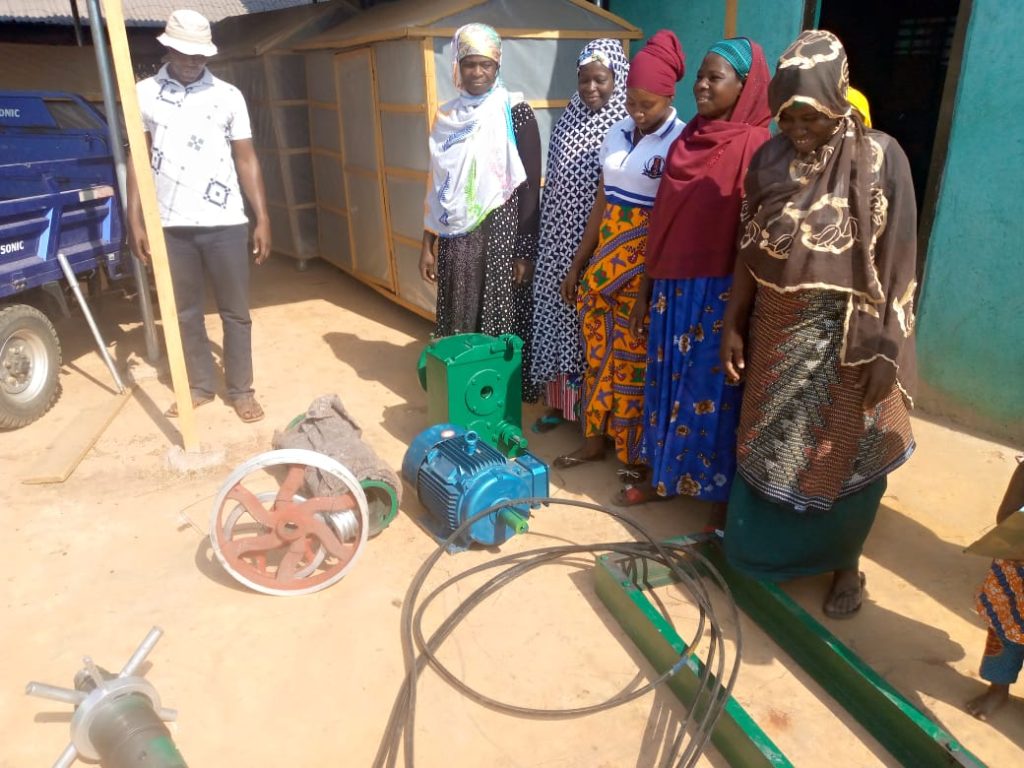

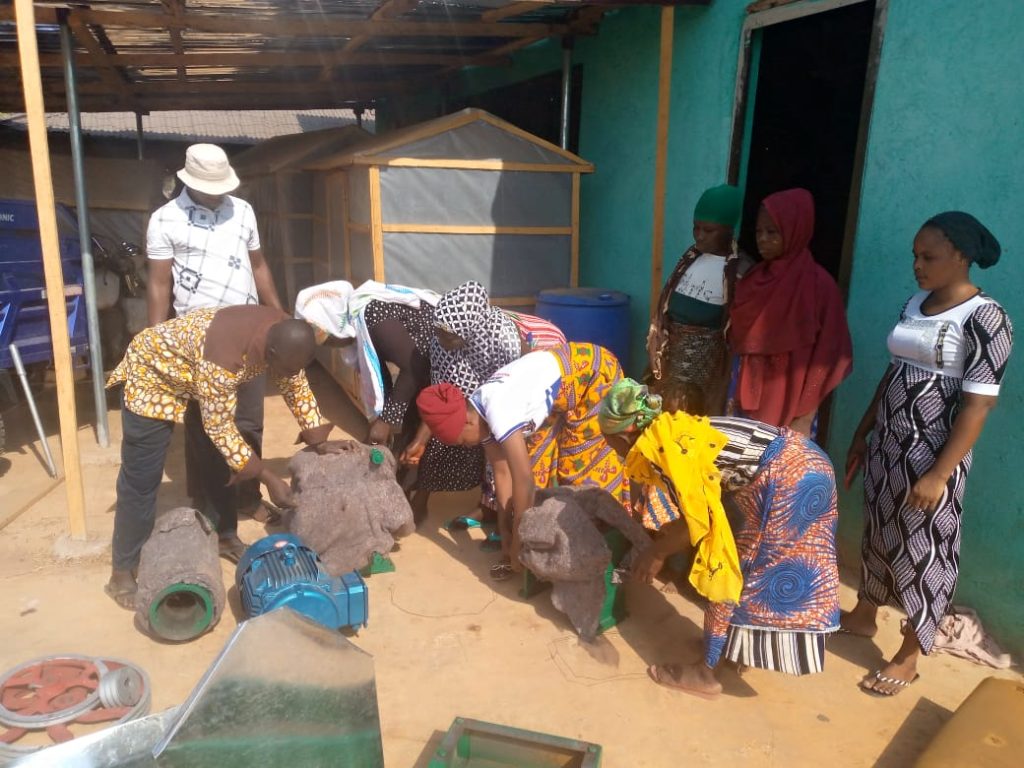
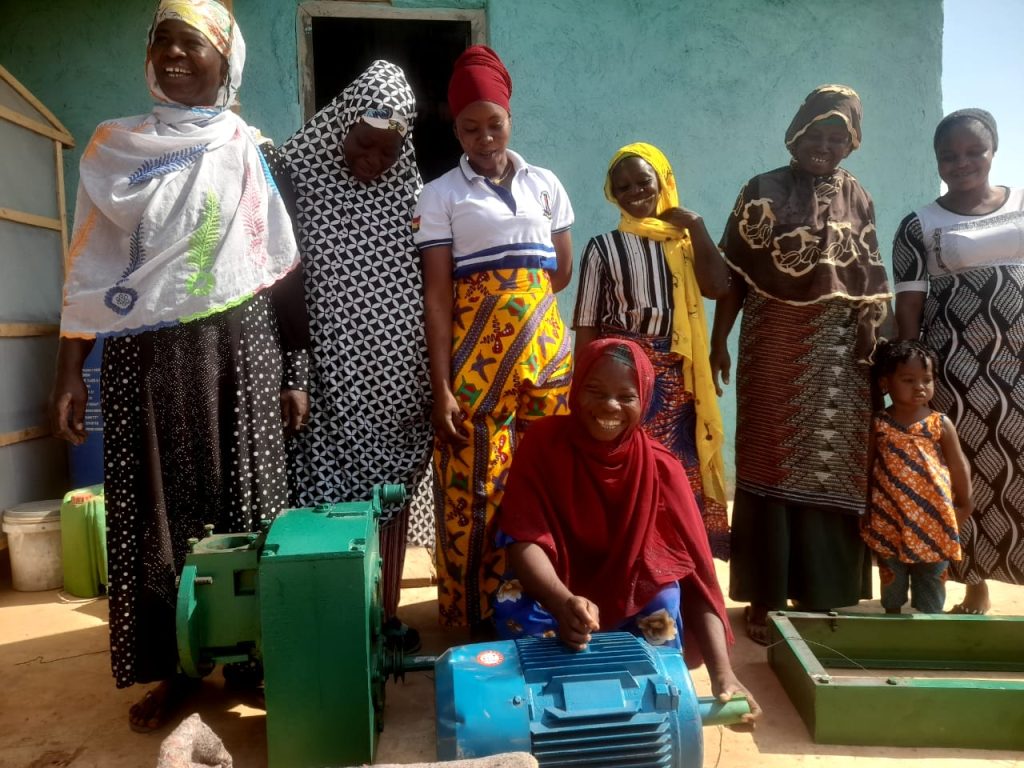
The new Neem oil press arrives in Wale Wale. Mostly women are employed processing the oil.
For Issifu and many others like him, foreign aid is something that he no longer wants to rely on. It comes with strings, endless paperwork and reporting. They come, they see, they conquer and then leave again, feeling good about themselves but often leaving the community they’re supposed to be helping in helpless disarray, waiting for the next bunch of White Saviours to roll into town and help them out.
And yes, we should help, but perhaps we should let go of the reins of power and just offer money, investment and support while they take the lead. The money’s important, and after all, if you live in Europe or the USA, or any other country in the global north whose riches were built on the backs of others, we owe it to them.
The last word should go to Anshu Gupta, Magsaysay award winner, a fellow of Ashoka and Schwab, and founder of Indian NGO Goonj. Anshu has long been a powerful advocate for change in the sector and asks that we replace “charity” with dignity. He believes that by empowering local communities and helping them to take control of their own destinies is the only way to provide development in a way that is fair, equitable and sustainable.
Resources
Power and its discontents: The long road to systemic change in the aid sector (Nicola Banks, Badru Bukenya , Willem Elbers , Innocent Kamya , Emmanuel Kumi , Lau Schulpen , Gijs van Selm , Margit van Wessel , Thomas Yeboah)
Submission to the UK Parliament IDC inquiry by Alan Braithwaite on behalf of Catalyst Now.
International Aid and Development: Performance, Measurement and Management
(Alan Braithwaite and Amelia Sanford)